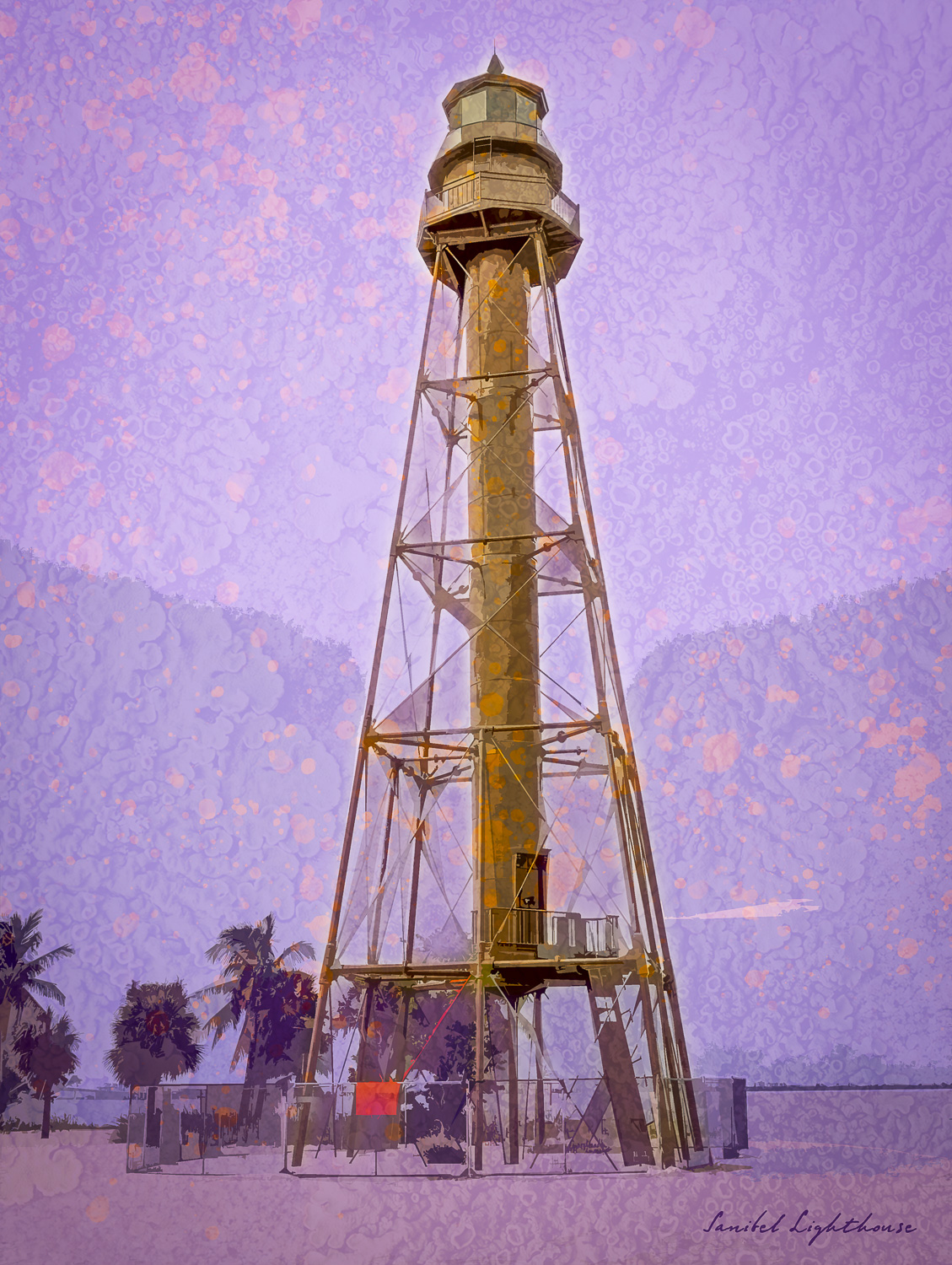
Standing on Point Ybel at the eastern tip of Sanibel Island, the Sanibel Island Light has guided mariners along Florida’s Gulf Coast since 1884. First lit with an oil-burning, third-order Fresnel lens, the 98-foot beacon was designed specifically to endure the shifting coastal sands and volatile subtropical weather of the barrier island. Unlike the classic brick-and-mortar sentinels of the northeast, Sanibel’s lighthouse was constructed as an open iron skeletal tower surrounding a central spiral staircase, engineered to let punishing storm winds and storm surge pass directly through its open framework.
For well over a century, the tower oversaw the quiet rhythms of the barrier island, from early cattle trade out of Punta Rassa to generations of beachcombers hunting for prized shells along Lighthouse Beach Park. The keeper’s quarters below, raised on pilings against high tides, housed dedicated lightkeepers until the station was fully automated in the 1940s.
In September 2022, the station faced its greatest test when Category 4 Hurricane Ian battered southwest Florida. The powerful storm surge washed away the historic keeper’s cottages and severed one of the tower’s supporting legs, yet the skeletal iron frame remarkably held its ground. Standing tall amid the devastation, the wounded beacon became a powerful symbol of resilience for the barrier islands. Quickly reinforced and relit in early 2023, the lighthouse remains an enduring navigational guide and the steadfast cultural anchor of Sanibel Island.