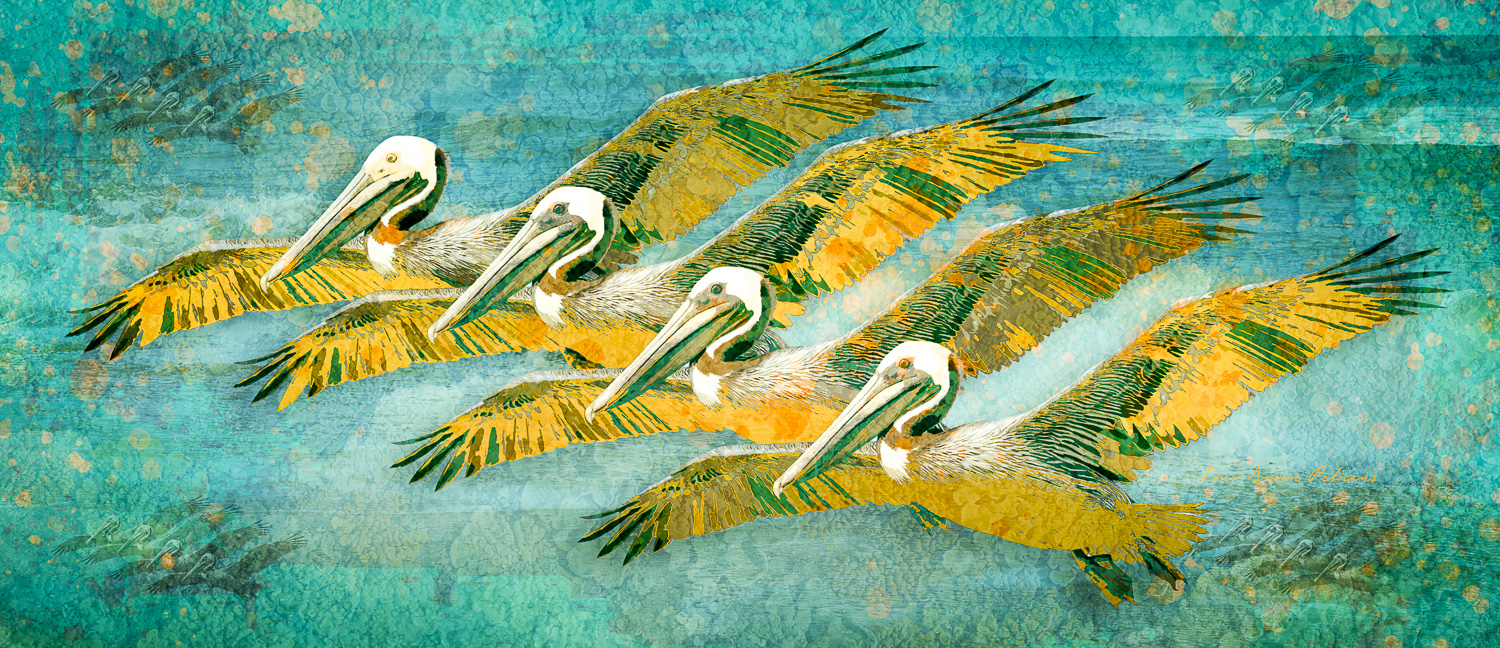
They glide in a disciplined echelon, four heavy bodies stitched together by the invisible contour of the ground effect. Just inches above the sea swell, their broad, slate-brown wings remain locked in shallow dihedral arcs, skimming the glassy trough where the air compresses against the saltwater. In this tight formation, each bird rides the wake and updraft of the leader ahead, an aerodynamic chain forged from effortless economy.
Without warning, the lead pelican tilts its silver-crowned head, banks sharply upward, and breaks the circuit. The other three follow in loose sequence, climbing into the coastal glare before snapping their wings back against their ribs. In a dizzying, corkscrewing plunge, the quartet dives bill-first into the shoal below.
The impacts are sudden and concussive—four erupting plumes of spray shattering the tide. Beneath the surface, cavernous gular pouches balloon instantly, engulfing seawater and stunned baitfish alike. When they bob back to the surface like weathered corks, their throat sacs sag heavy and translucent. Each pelican tilts its long bill downward, methodically draining gallons of briny water through parted mandibles while keeping the trapped fish pinned within.
Nearby laughing gulls hover shrieking, hoping to snatch a misplaced meal right from the pouch rim. But with synchronized, prehistoric snaps of their heads, the four pelicans swallow their catch whole. Realigning their oiled plumage with a quick shudder of their shoulders, they kick against the cresting chop, beating their great wings together to reclaim the horizon.