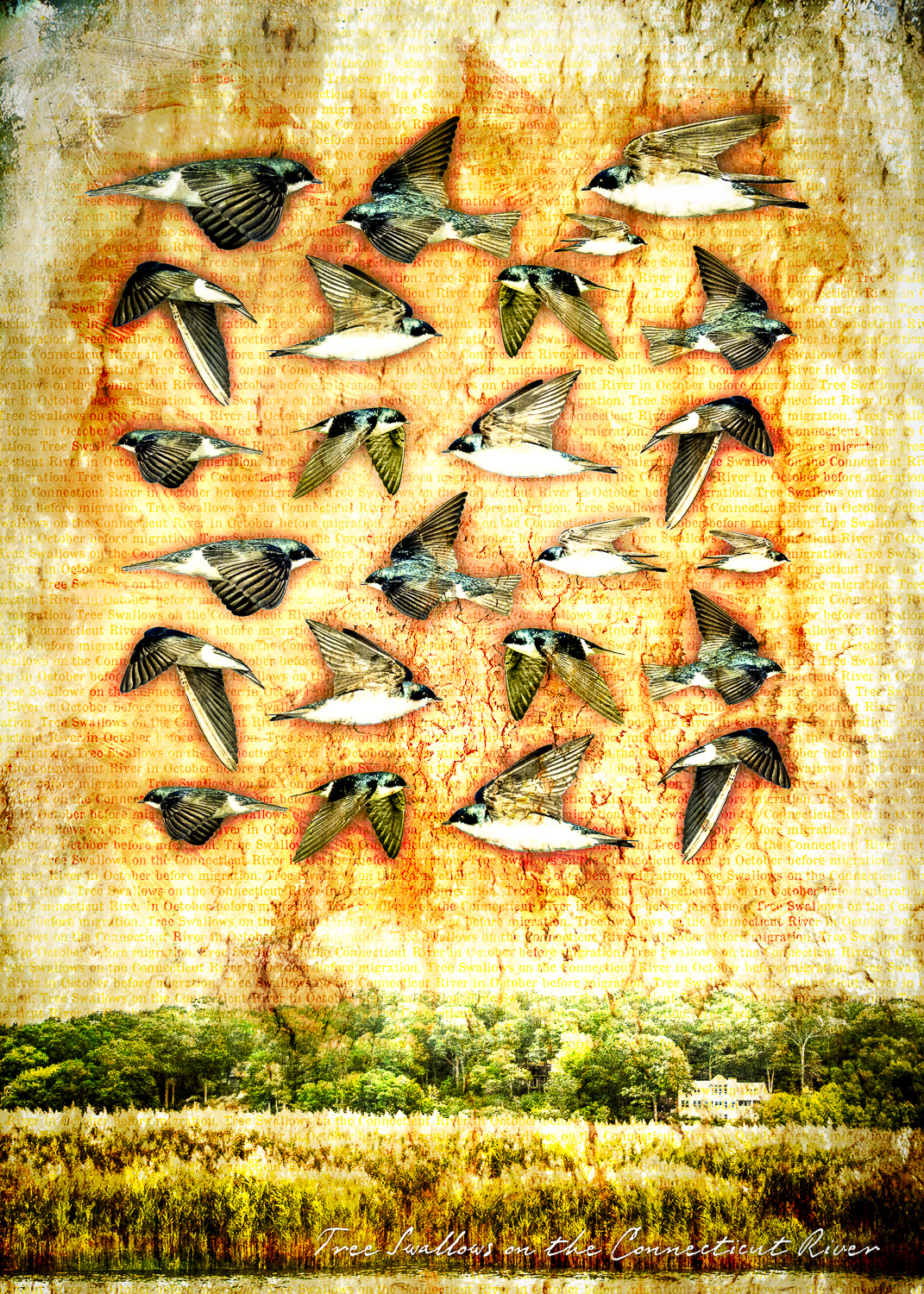
Each autumn, the lower Connecticut River becomes the stage for one of North America’s most mesmerizing aerial spectacles: the staging migration of the tree swallow (Tachycineta bicolor). From late August through mid-October, hundreds of thousands of these iridescent songbirds converge over the brackish tidal marshes near Goose Island in Old Lyme, using the river valley as a critical refueling depot before journeying toward Florida, the Caribbean, and Central America.
By day, the swallows scatter across miles of coastal wetland to gorge on midges, mayflies, and waxy bayberries—building fat reserves essential for long-distance flight. But as twilight approaches, individual feeding groups coalesce into an immense, swirling cloud over the reeds. What begins as a diffuse haze soon condenses into a synchronized murmuration that twists and pulses against the sunset like smoke caught in a slipstream.
The choreography serves a practical purpose: baffling aerial predators like merlins and peregrine falcons that patrol the riverbanks at dusk. Then, in a sudden, breathtaking cue, the entire flock drops. Forming a living funnel—an avian tornado—the birds plunge en masse into the dense Phragmites and wild rice beds. Within seconds, hundreds of thousands of birds vanish beneath the canopy, their collective wingbeats creating an audible rush like falling rain. Sheltered together in the river’s reed beds, they ride out the autumn chill before morning calls them back into the sky.