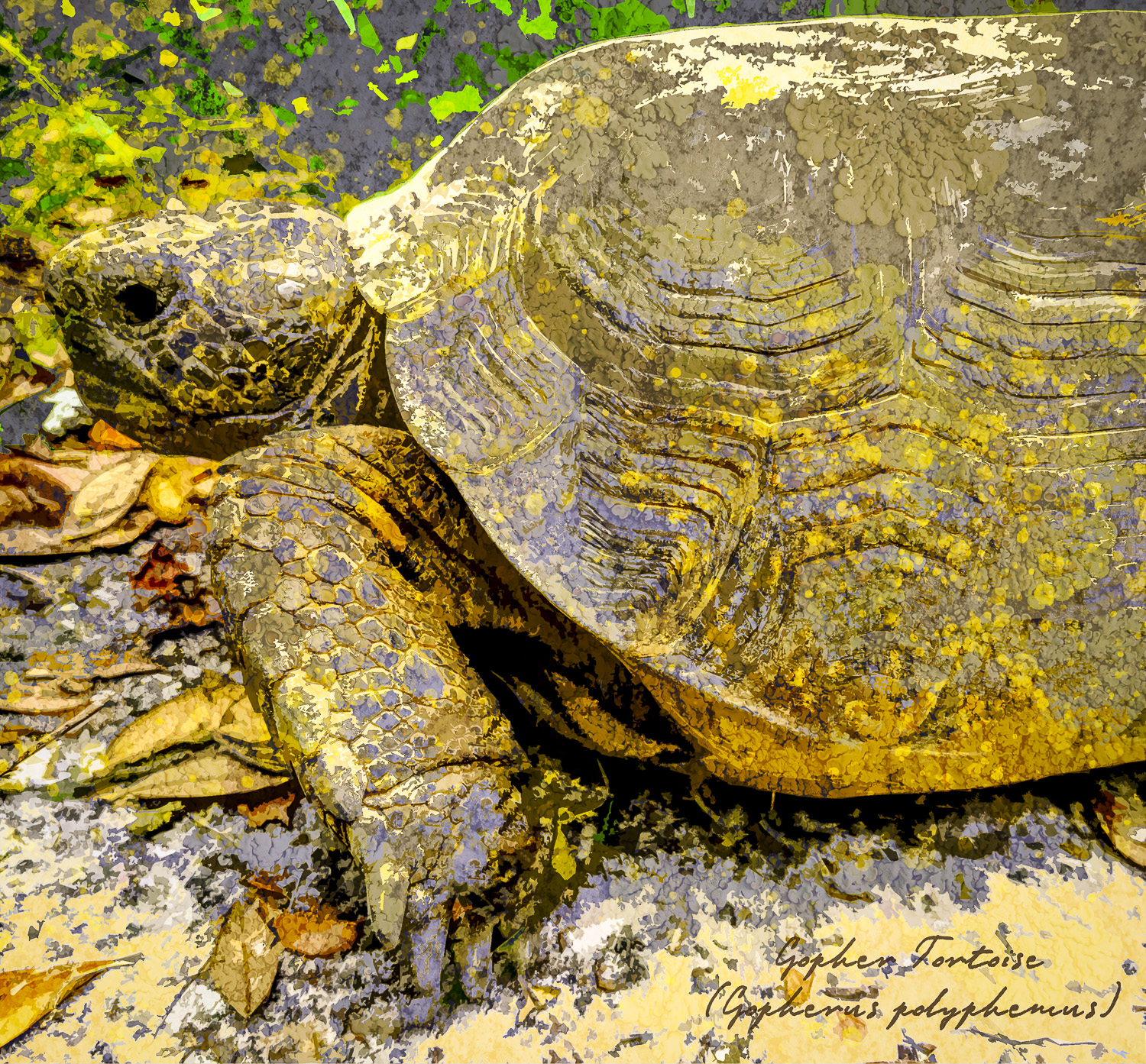
The gopher tortoise (Gopherus polyphemus) is one of Sarasota County’s most vital ecological engineers. Native to the dry, upland pine flatwoods, scrub, and coastal dunes of Southwest Florida, this ancient land tortoise is recognized as a keystone species.Its presence fundamentally shapes and sustains the local native ecosystem.
Using shovel-like forelimbs, an adult gopher tortoise excavates extensive underground burrows that average 15 feet in length and over 6 feet deep. These subterranean tunnels maintain stable temperatures and humidity year-round, offering life-saving refuge from sweltering summer heat, winter cold snaps, and brush fires. In Sarasota’s preserves and coastal hammocks, more than 350 other wildlife species—including the eastern indigo snake, gopher frog, Florida mouse, and burrowing owl—rely on these burrows for survival.
As opportunistic grazers, gopher tortoises forage on low-growing native grasses, wiregrass, prickly pear, and berries such as gopher apple, dispersing seeds across the landscape.
Due to rapid coastal development, habitat fragmentation, and road mortality, the gopher tortoise is classified as a State-designated Threatened species in Florida.Both the animals and their active burrows are strictly protected under Florida law, requiring state permits and rigorous relocation protocols before any construction or clearing can proceed. In areas like Oscar Scherer State Park, Myakka River State Park, and coastal parks across Sarasota, conservationists actively manage scrub through prescribed burns and native revegetation to preserve the open, sunlit terrain these quiet reptiles require to thrive.