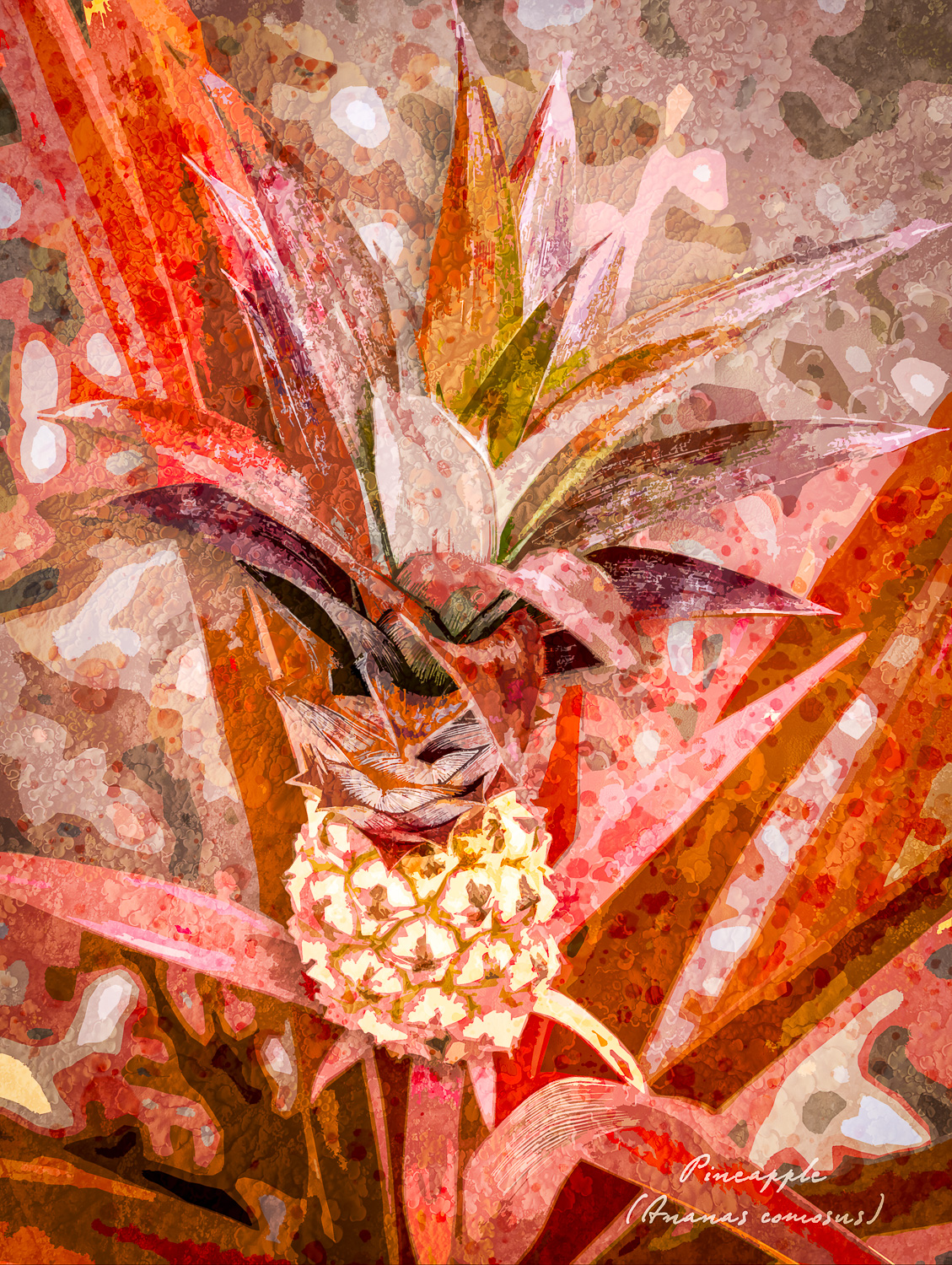
The pineapple (Ananas comosus), a terrestrial member of the bromeliad family (Bromeliaceae), holds a storied history and an enduring presence in South Florida. Introduced to the region in the mid-19th century, pineapples fueled a massive agricultural boom along Florida’s southeastern coast during the late 1800s. The town of Jensen Beach even crowned itself the “Pineapple Capital of the World,” shipping millions of crates annually via Henry Flagler’s Florida East Coast Railway. Although devastating freezes, international trade competition, and soil-borne diseases eventually shuttered commercial production, the fruit remains an iconic fixture in subtropical home gardens.
South Florida provides the ideal climate for pineapples to thrive. Falling within USDA hardiness zones 10 and 11, the region supplies year-round warmth, abundant sunshine, and high humidity. Unlike many temperamental tropicals, Ananas comosus is drought-tolerant and handles sandy, nutrient-poor soil well, provided drainage is sharp; waterlogged roots are its primary vulnerability.
Growing pineapples locally requires little more than kitchen scraps and patience. Gardeners routinely propagate new plants by twisting the leafy crown from a store-bought fruit, letting it cure for a few days, and planting it directly into garden beds or 5-gallon containers. Popular home varieties include ‘Smooth Cayenne’, known for its juicy tartness, and low-acid cultivars like ‘White Jade’ and ‘Sugarloaf’. Flowering typically occurs 14 to 24 months after planting, yielding a central stalk packed with purple blossoms that fuse into a sweet, homegrown composite fruit.