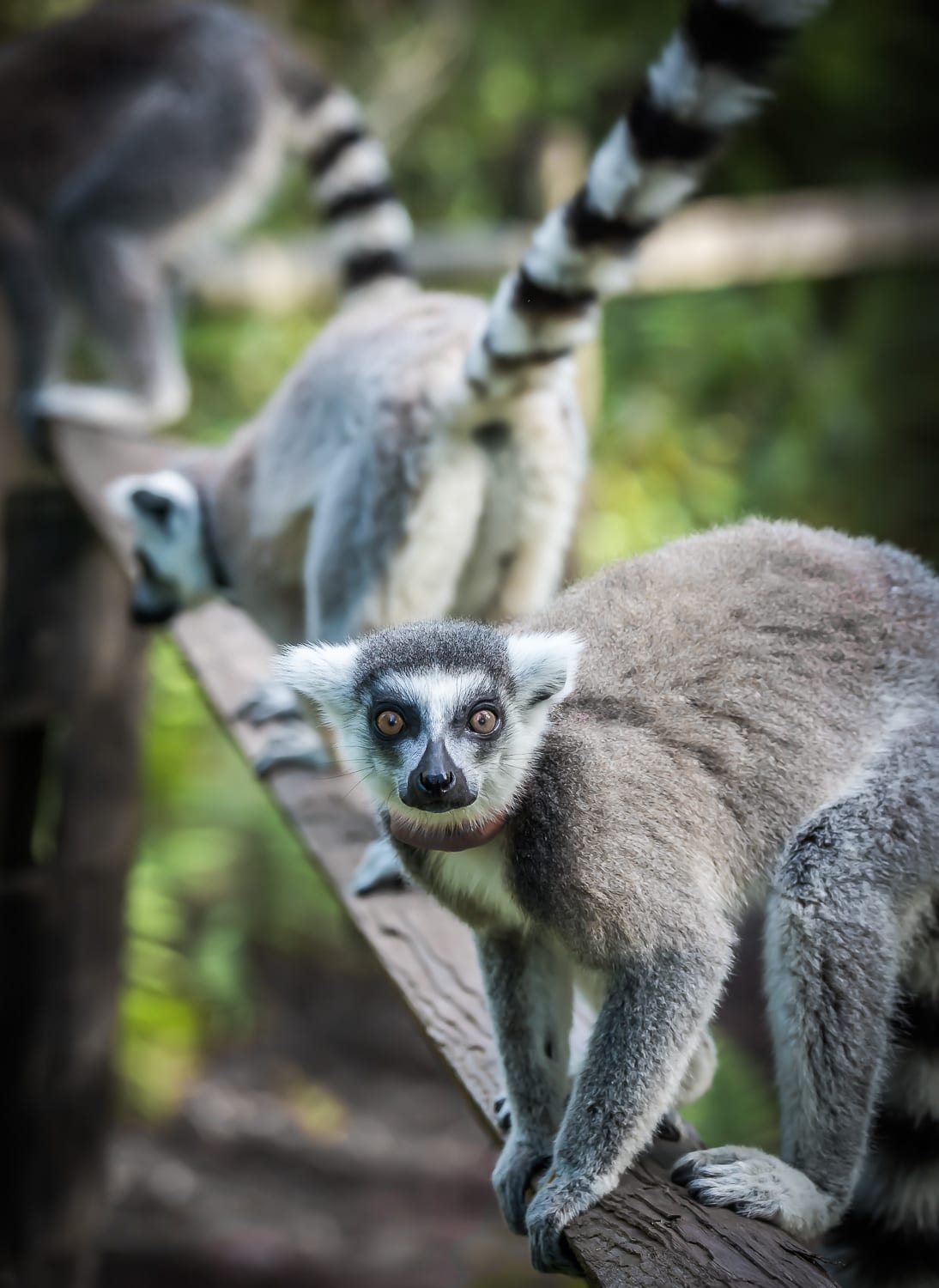
We spent a few hours visiting the Lemur Conservation Foundation in Myakka City — totally great!
There are certain days in the life of a Florida naturalist that sparkle brighter than the rest—days when the wild comes a little closer, when a creature from another hemisphere peers at you with curious golden eyes, and suddenly the world feels wonderfully mysterious again.
My visit to the Lemur Conservation Foundation in Myakka City, Florida was one of those shimmering days.
From the moment I turned onto the sandy road leading to the reserve, I felt I was entering a strange and unexpected crossroads where Madagascar meets Myakka, where ancient primate lineages cross paths with the sprawling oak savannas and palmetto prairies I know so well.
What follows is the full account of that journey—how to get there, what you’ll find, where the trails wind, and which wild neighbors (both Malagasy and Floridian) might greet you along the way.
GETTING THERE: Directions from Sarasota and Bradenton
The Lemur Conservation Foundation sits quietly in rural Myakka City, part sanctuary, part scientific outpost, and part immersive portal into the forests of Madagascar.
It is not the sort of place you stumble upon accidentally. You go there deliberately—and that’s half the magic.
From Sarasota (approx. 45 minutes):
- From downtown Sarasota, take Fruitville Road (SR 780) east.
- Continue for about 18 miles, passing cattle pastures, equestrian properties, and stands of slash pine and cabbage palms.
- Turn left (north) onto Verna Road.
- After 3 miles, turn right (east) onto Myakka Road.
- Continue until you reach Clay Gully Road.
- Turn right and follow Clay Gully Road until you see signs for the Lemur Conservation Foundation.
From Bradenton / Lakewood Ranch (approx. 35 minutes):
- Head east on SR 64.
- Turn right (south) onto Verna Bethany Road.
- At Clay Gully Road, turn left (east).
- Follow Clay Gully Road through peaceful ranchland until the Lemur Conservation Foundation appears like a little Malagasy mirage on your left.
Important Tip:
Visits are by reservation only, so be sure to arrange a tour in advance. The lemurs keep a calm routine, and the Foundation honors that rhythm with quiet, guided experiences.
ARRIVAL: The Gateway Between Worlds
The entrance is simple—no towering gates or busy parking lots. Just a quiet welcome center tucked among longleaf pines, wiregrass, saw palmetto, and sandy soil dotted with tracks of local residents: armadillo, raccoon, gopher tortoise.
As I stepped out of the car, the first sound I heard was not a lemur at all, but the drumming wingbeats of a red-shouldered hawk overhead. Florida reminds you where you are before Madagascar whispers in.
But soon enough, the whispers began.
A soft, almost feline yip came from somewhere beyond the trees. Then the higher, bouncing chirp of a sifaka. My skin tingled. This was Florida, yes—but tinged with something older, stranger, and infinitely compelling.
THE TOUR BEGINS: Meeting the Lemurs
Our guide—a young biologist with the relaxed confidence of someone who has spent many hours among wild-minded primates—led us toward the forest habitats, where lemurs roam large wooded enclosures that mimic the spiny and deciduous forests of Madagascar.
And then I saw my first lemur of the day.
A Coquerel’s sifaka, perched impossibly light on a pine branch, like a ghost with warm, intelligent eyes. He tilted his head, appraising us with a patient curiosity.
Sifakas do not leap—they float. They move with a dancer’s grace, bounding sideways along the ground in long, elegant arcs. Seeing one in motion is like watching a myth in real time.
Nearby, a troop of ring-tailed lemurs—the iconic species with striped tails like peppermint branches—groomed each other under the shade of a live oak. Their soft murmurs blended with the rustle of palmetto fronds in the breeze.
And in another habitat, a red-ruffed lemur leapt with astonishing agility, her russet fur glowing against the green backdrop.
As a Florida naturalist, I’m versed in the movements of gators, herons, bobcats, and storks. But the lemurs… they unlocked a different part of my brain. They are both wild and gentle, ancient yet fragile. There is something undeniably soulful about being in their presence.
TRAIL MAP: A Naturalist’s Guide to Wandering the Grounds
The Lemur Conservation Foundation property includes trails, education areas, research buildings, and lemur habitats. Below is a simple map-style description of the visitor areas.
                North
                 ↑
                 |
        --------------------------------
        |                              |
        |      Forest Lemur Habitats   |
        |      (Ring-tailed,          |
        |       Sifaka, Ruffed)       |
        |                              |
        |    [1] Sifaka Forest A       |
        |    [2] Ring-tail Enclosure   |
        |    [3] Ruffed Lemur Grove    |
        --------------------------------
                   |      |
                   |      |
         ---------------------------------
         |       Education Campus         |
         |  - Welcome Center              |
         |  - Small Museum & Exhibits     |
         |  - Research Building           |
         ---------------------------------
                   |
                   |  Lemur Loop Trail
                   |
        -------------------------------------
        |          Lemur Forest Loop         |
        |  A sandy, gently winding trail     |
        |  through pine flatwoods, passing   |
        |  gopher tortoise burrows, wild     |
        |  flowers, and distant lemur calls. |
        -------------------------------------
                 |           |
                 |           |
        ---------------------------------------
        |      Savanna Overlook & Picnic Area  |
        |    Panoramic view of open prairie     |
        |    with sandhill cranes, wild turkey, |
        |    and whitetail deer.                |
        ---------------------------------------
This is not a strenuous hiking environment. Trails are mostly flat, sandy, and sunlit, with intermittent shade under pines and laurel oaks.
But what it lacks in elevation, it makes up in soundscapes—Florida birds calling from one side, lemur troops vocalizing from the other.
A birder and a primatologist could hold hands and both feel at home here.
FLORA: Plants of the Lemur Landscape
Though the Reserve is designed to support lemur well-being, it remains distinctly Floridian in its vegetation. Here are the species I encountered on the trails and around the habitats:
Native Trees & Shrubs
- Slash Pine – towering, resin-scented, beloved by woodpeckers.
- Longleaf Pine – the ancient keystone of pine-flatwoods ecosystems.
- Live Oak – bending gracefully under the weight of Spanish moss.
- Laurel Oak – providing cool pockets of shade.
- Cabbage Palm – Florida’s state tree and eternal habitat provider.
- Saw Palmetto – thick, plentiful, and humming with insect life.
Wildflowers & Groundcover
- Wiregrass – essential to the longleaf ecosystem.
- Coreopsis – bright Florida sunshine in petal form.
- Spiderwort – purple blooms thriving along sandy margins.
- Tickseed Sunflower – golden patches buzzing with bees.
- Black-eyed Susan
- Scarlet Hibiscus (in wetter areas)
Invasive Species to Watch For
(Though the Foundation manages them actively.)
- Brazilian pepper
- Caesar weed
- Natal grass
The beauty of the property is that it feels both well-stewarded and ecologically alive. Human hands are clearly at work, but they are respectful and restrained.
FAUNA: Wildlife (Beyond Lemurs) That Calls This Place Home
A naturalist’s notebook always fills quickly at the Lemur Foundation. Madagascar provides the headliners, but Florida provides the choir.
Birds
- Red-shouldered Hawk
- Sandhill Crane
- Wild Turkey
- Eastern Bluebird
- Carolina Wren
- Pileated Woodpecker
- Northern Bobwhite
- Great Egret & Snowy Egret
- Swallow-tailed Kite (in summer months)
Mammals
- White-tailed Deer
- Bobcat (rarely seen but present)
- Armadillo
- Raccoon
- River Otter (in nearby waterways)
Reptiles & Amphibians
- Gopher Tortoise (their burrows dot the sandy trails)
- Southern Black Racer
- Corn Snake
- Green Anole
- Eastern Fence Lizard
- Pig Frog and Southern Leopard Frog (seasonal)
Invertebrates
- Gulf Fritillary Butterfly
- Zebra Longwing Butterfly
- Giant Swallowtail
- Carolina Satyr
- Golden Silk Orb-weaver (summer)
And of course, the lemurs themselves:
- Ring-tailed Lemur
- Coquerel’s Sifaka
- Red-ruffed Lemur
- Sanford’s Brown Lemur
- Collared Lemur
- Mongoose Lemur
Their calls sometimes echo across the prairie like alien bird songs—a surreal, enchanting layer in the Florida soundscape.
A MOMENT OF ATTUNEMENT: When Myakka Meets Madagascar
Halfway through the Lemur Forest Loop, I stopped near a large gopher tortoise burrow. A ring-tailed lemur barked in the distance—a short, sharp alarm call.
At the same moment, a red-shouldered hawk screeched overhead.
Two completely unrelated species, from ecosystems an ocean apart, producing warning calls into the same warm Florida air.
I felt a strange and beautiful synchronicity—a reminder that all animals, regardless of continent, are united by the instinct to communicate, to protect, to belong.
It is a privilege to witness such overlaps.
A lemur sanctuary in the middle of a Florida pine forest is not a whimsical novelty—it is a testament to the global nature of conservation.
THE EDUCATION CENTER: Learning the Larger Story
The onsite education center is small but rich with artifacts and displays:
- images and stories from Madagascar field sites
- skulls, bones, and comparative anatomy
- conservation updates
- scientific research initiatives
- Malagasy cultural history
One display that struck me deeply was the explanation of how lemur species are disappearing at an alarming rate due to habitat loss, hunting pressures, and climate change in Madagascar.
I left the exhibit feeling grateful—truly grateful—that Florida is playing a role, however small, in keeping these species alive.
DEPARTURE: Carrying the Lemurs With You
As my tour ended and the sun hung low over the prairie, the ring-tailed lemurs gathered in a social cluster—grooming, sunbathing, chattering softly. A sifaka leapt, weightless, between two pines. A red-ruffed lemur barked its resonant call from deep in the grove.
The Florida wildlife resumed its evening chorus. Cranes bugled. A bobwhite whistled. Cicadas revved up.
It felt like the whole landscape—Madagascar and Florida braided together—was singing.
As I drove back down Clay Gully Road, dust swirling behind me like a comet tail, I realized I had come expecting to observe animals.
What I received instead was connection—the sense that conservation is not about saving creatures from afar, but about weaving their stories into our own.
The lemurs stay with you long after the visit ends. Their ancient eyes linger in your mind. Their soft calls echo. Their presence reshapes you.
This is not just a sanctuary.
It is a bridge between worlds.
A promise across oceans.
A reminder that wonder—true deep wonder—is still alive.