This was a welcomed retreat in the middle of a long bike ride on the GAP trail.
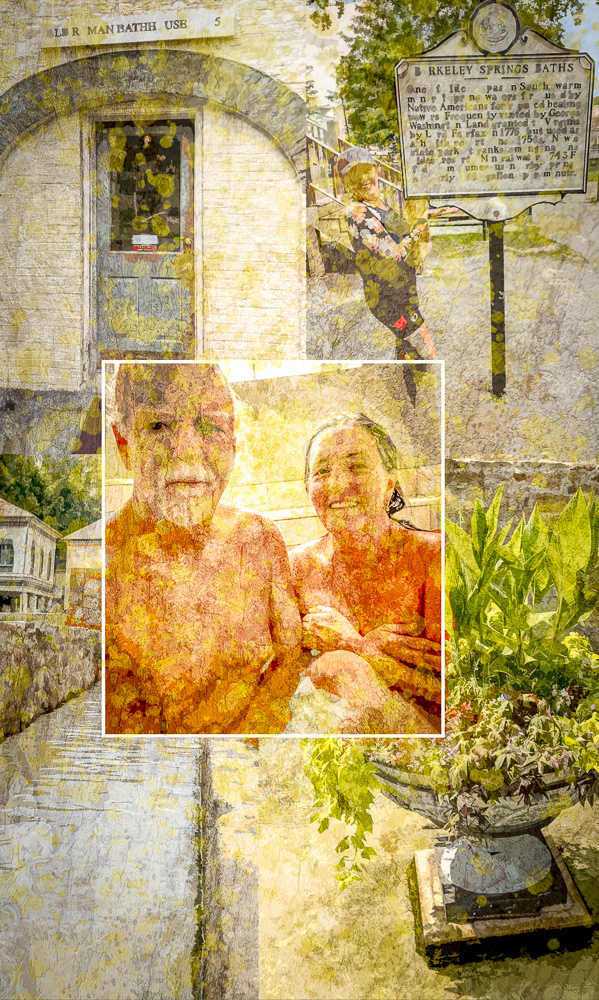
The Healing Waters of Berkeley Springs: A Naturalist’s Immersion
There is something ancient in the sound of a spring. Long before science measured temperature and mineral content, the bubbling voice of water rising from the earth called to the animal in us—to drink, to soak, to heal. That same voice still sings beneath the limestone ridges of the Appalachians, where the warm mineral waters of Berkeley Springs, West Virginia, have been flowing for thousands of years. To a naturalist, this small mountain town is more than a quaint spa destination; it’s a living intersection of geology, ecology, and the human longing for renewal.
The Spring That Never Sleeps
Even in the depth of winter, when the nearby ridges are quilted in snow and icicles hang like crystal harps from the old sycamores, the springs keep a steady warmth—74.3 degrees Fahrenheit, to be exact. Their constancy is their miracle. Fed by rainfall filtering through the uplands of Cacapon Mountain, the water seeps downward through porous sandstone and limestone for perhaps 3,000 years, gathering minerals and gentle heat from the earth’s crust before rising back to the surface in a clear gush of life.
If you stand near the main spring basin in Berkeley Springs State Park, you can feel the living pulse of the earth. The water pours out at a rate of 1,000 gallons per minute, as if the mountain itself were breathing. Mosses cling to the limestone walls, thriving in the perpetual humidity. The air smells faintly of minerals—clean, soft, metallic, like rainwater kissed by stone.
This is no ordinary spring. The chemistry is as remarkable as the constancy: traces of magnesium, potassium, silica, and sulfates, but with very low sulfur and iron, giving the water an unusually pure, silky quality. Geologists say it’s the unique interplay of Paleozoic limestone, sandstone, and shale formations that filters and warms it, but to the naturalist standing there—hand dipped in a current that began as ancient rain—it feels like touching time itself.
A Landscape of Comfort and Power
The surrounding valley tells the story of water’s artistry. The Cacapon and Potomac Rivers carve soft folds through the Ridge and Valley Province, that long corridor of parallel ridges and fertile hollows stretching from Pennsylvania to Tennessee. Here, tectonic forces have folded the land like a sleeping dragon, and the springs bubble up from its resting flank. Even the name “Cacapon,” from a Native American word meaning “medicine waters,” carries the echo of reverence.
In the warmer months, the park around the springs is lush with tulip poplars, sycamores, oaks, and pawpaws, their roots drinking from unseen channels beneath the ground. Eastern phoebes dart from branch to branch, flicking their tails as they hawk for insects over the pools. Tiger swallowtails float through the mist like yellow prayer flags. The landscape hums with the subtle health of a place that has always been tended—by water, by wind, by centuries of belief.
Before the Colonists Came
Long before any town was built here, the springs were sacred ground. Archaeologists have found artifacts from Indigenous peoples dating back over 10,000 years, suggesting these waters were visited and revered since the last Ice Age. The Shawnee and Tuscarora tribes used the area as neutral territory, a shared sanctuary for healing and peace. They came not just for physical relief, but to cleanse spirit and mind. To them, the earth’s warm exhalations were evidence of the Great Mystery—a direct gift from the living ground.
When I imagine those early visitors, I picture a quiet camp beside the steaming pools, the smoke from their fires blending with the morning mist. They would have noticed, as I do now, how the water seems to breathe with the same rhythm as the body—how it invites stillness and deep attention. Their worldview, rooted in the kinship of all beings, would have seen no separation between body, water, and mountain.
George Washington Takes a Bath
The colonial story of Berkeley Springs begins, as so many American tales do, with George Washington. At sixteen, while surveying the western lands for Lord Fairfax in 1748, he wrote in his diary about “taking the waters” at what was then called the Warm Springs. Later, as a seasoned general and president, he returned repeatedly to bathe, bringing friends and family to what became the country’s first spa resort.
In 1776—while the Revolution was still raging—the Virginia legislature established “The Town of Bath,” named after the famous English spa. Its public square centered not on a courthouse or church but on the springs themselves, a symbolic declaration that nature was the town’s sacred heart. Wooden bathhouses were built over the pools, and genteel society came from miles around to soak, gossip, and seek cures for everything from rheumatism to melancholy.
Yet even amid its colonial refinements, the springs remained what they had always been: a natural expression of the earth’s inner processes. Washington, a farmer and surveyor before he was a statesman, surely understood this. He camped under the stars near the springs, not far from where modern visitors now recline in tiled baths. The same mineral water that eased his battle-worn muscles still flows uninterrupted today.
The Naturalist’s Soak
To soak in these waters is to participate in a hydrological pilgrimage. When I slide into one of the old Roman baths—simple stone tubs fed directly from the spring—it feels like being enfolded by the mountain’s own warmth. The temperature is perfect for relaxation, not hot but deeply comforting, like the skin of a living creature. Within minutes, the body’s tensions dissolve, and the mind begins to float toward the edges of dreaming.
For a naturalist, the experience is more than sensory pleasure—it’s ecological communion. Each molecule of water that touches my skin has passed through soil, rock, and time, exchanging minerals and memory with the land. The very warmth I feel is the stored solar energy of another age, radiating back through the geological record. In the stillness of the bath, I can sense the slow pulse of the Appalachian earth, a continuity that humbles human timekeeping.
Outside, the park’s small channel flows toward Warm Spring Run, a tributary of the Potomac. A family of mallards paddles lazily among the reeds. Water striders skate across the surface tension like miniature spirits, and dragonflies patrol the banks in flashes of blue and green. The warm water supports micro-ecosystems that persist even in winter—a rare thermal niche where certain aquatic invertebrates thrive. To a biologist, it’s a microclimate; to a poet, a quiet miracle.
Minerals, Medicine, and Myth
Through the 18th and 19th centuries, the springs’ reputation as a healing destination grew. Physicians prescribed “taking the waters” for gout, paralysis, nervous disorders, even infertility. Though modern medicine regards these cures with skepticism, there’s genuine science behind the restorative effects. The minerals soften the skin, stimulate circulation, and relax muscles. But perhaps more importantly, the ritual itself—slowing down, surrendering to nature, immersing in warmth—activates the body’s parasympathetic calm, the biological opposite of stress.
The line between science and myth here is beautifully blurred. Every mineral spring has its folklore: tales of miraculous recoveries, ghostly guardians, or hidden energies. In Berkeley Springs, local legends speak of a spirit of the waters, sometimes described as a shimmering woman seen near dawn, blessing those who come with pure intent. Whether real or metaphorical, such stories point to the same truth—the recognition that healing arises from relationship, not just chemistry. To step into the water is to accept the invitation of the earth to be whole again.
A Town Built on Flow
Walk through the streets of Berkeley Springs today, and the spring’s influence is everywhere. Galleries, cafés, and wellness shops cluster around the park, their names invoking water and renewal—The Star Theater, The Bath House Day Spa, Lotus Rising. Artists and herbalists have replaced the powdered wigs of Washington’s era, but the spirit of reverence remains. Water still flows freely through public fountains, where anyone can fill a jug at no cost—a civic gesture that feels almost radical in our bottled-water age.
I stop by one of these spigots, watching locals line up with gallon containers. “Best water on earth,” says an elderly man, his dog waiting patiently at his feet. He’s right. It tastes alive—soft, slightly sweet, with a hint of limestone purity that tells you this is not surface runoff but water that has dreamed underground.
The Town of Bath Historic District preserves many of the 18th-century buildings, including Washington’s Bathtub, a stone-lined pool that claims to mark his favorite spot. Whether he actually bathed there is less important than what the monument represents: America’s oldest ritual of bathing in nature, an early expression of ecological intimacy that predates our national parks.
The Ecology of Restoration
Every healing place depends on balance, and Berkeley Springs is no exception. The health of the springs relies on the surrounding watershed—the forests, soils, and aquifers that feed the flow. In recent decades, local conservation groups have worked to protect the recharge area from pollution and overdevelopment. Because the water takes millennia to travel underground, any contamination today could echo far into the future.
It’s a reminder that healing and stewardship are inseparable. The same minerals that soothe our bodies depend on intact ecosystems. The limestone bedrock that filters impurities can be overwhelmed by chemical runoff or erosion. Protecting the springs is not nostalgia; it’s ecological necessity.
Each time I visit, I make a small ritual of gratitude: touching the water, then the soil, acknowledging their shared cycle. Around me, the park’s trees seem to nod in agreement. A red-bellied woodpecker drums from the sycamore near the bathhouse. The sun glints off the flowing channels, turning the scene almost mythic—the eternal conversation between stone and stream.
The Spirit of the Springs
There’s a kind of democracy to a public spring. Here, in this mountain town, water flows for everyone—presidents, locals, travelers, dreamers. It asks nothing but respect. People come to heal from surgeries, heartbreaks, city stress, or simply the dull ache of modern life. They leave softened, quieted, a little more porous to the world around them.
As dusk settles, I walk back to the main springhouse. The air is cool now, and steam rises in gentle ribbons from the water. Bats flutter overhead, stitching the twilight with quick, erratic arcs. Somewhere nearby, a child laughs—a sound as clear as the flowing spring. For a moment, all distinctions between natural and human, past and present, seem to dissolve. The spring keeps flowing, as it always has, an unbroken thread through the history of life in these mountains.
Conclusion: Lessons from a Living Earth
To a naturalist, Berkeley Springs is more than a spa; it’s a teacher. It reminds us that healing is not a product but a process—one rooted in the patient intelligence of the earth. The warm mineral water that soothes the skin is the same water that carved valleys, nourished forests, and sustained tribes long before us. In bathing here, we don’t merely cleanse ourselves; we reenter the planetary body.
Perhaps that’s why the experience lingers long after the skin has dried. You carry with you a subtle recalibration, a reminder that well-being begins where you meet the natural world with reverence. The spring has never stopped flowing, and neither should our gratitude.
In the end, every bath in Berkeley Springs is an act of remembering—of the deep continuity between water and life, mountain and mind, earth and human. As I leave the park and glance back at the steam rising in the starlight, I realize that this little Appalachian town is, in its own quiet way, a cathedral. The altar is water. The hymn is flow. And the congregation is everyone who has ever listened to the song of the spring and felt themselves healed.