Cumberland Island, Georgia, is a place where time seems to have folded in on itself. As the largest and southernmost of Georgia’s Golden Isles, it offers a rare glimpse into a coastal wilderness that has largely escaped the high-rise sprawl characterizing much of the American Atlantic seaboard. Accessible only by boat, the island is a sanctuary of roughly 36,000 acres, over half of which is designated as a National Wilderness Area. It is a mosaic of shifting sands, tangled forests, and salt-slicked marshes, each ecosystem supporting a cast of characters both native and legendary.
The Guardians of the Shore: Dunes and Beaches
The journey into Cumberland’s nature begins at the Atlantic edge. The island boasts 17 miles of undeveloped beach, a stark contrast to the manicured sands of modern resorts. Here, the landscape is shaped by the relentless rhythm of the tide and the sculpting hand of the wind.
The primary defense against the ocean is the dune system. These are not mere piles of sand but living structures held together by the deep roots of sea oats (Uniola paniculata). These plants are the architects of the island; their stems trap windblown sand, while their extensive root systems anchor the dunes against storm surges.
In the soft sand of the upper beach, a prehistoric ritual unfolds every summer. Cumberland Island is one of the most important nesting grounds in Georgia for the Loggerhead sea turtle (Caretta caretta). From May through August, these ancient voyagers haul themselves onto the shore under the cover of darkness to deposit their eggs. Months later, the dunes come alive as hatchlings scramble toward the surf, guided by the moonlight reflecting off the waves.
The Whispering Giants: The Maritime Forest
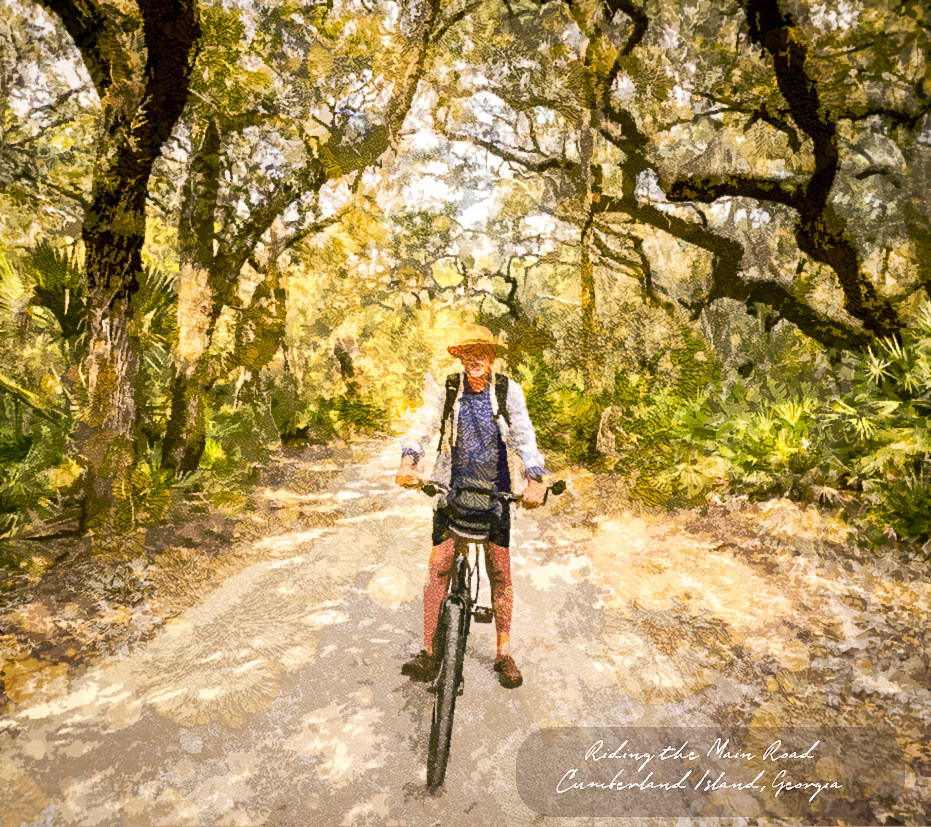
Moving inland, the salt-sprayed air softens as you enter the maritime forest, perhaps Cumberland’s most iconic ecosystem. To step under the canopy is to enter a cathedral of green and grey.
The Live Oak Canopy
The dominant feature here is the Southern Live Oak (Quercus virginiana). Unlike their northern cousins, these oaks are evergreen, providing a year-round ceiling of shade. On Cumberland, the trees are sculpted by a process known as salt pruning. Salt spray from the ocean kills the buds on the windward side of the trees, forcing them to grow away from the sea. This results in the gnarled, twisted, and horizontal limb structures that give the forest its haunting, “enchanted” appearance.
The oaks are rarely seen alone. They are draped in Spanish moss (Tillandsia usneoides), which is neither Spanish nor a moss, but a bromeliad—a relative of the pineapple. It draws its nutrients and moisture from the air, hanging like silvery lace from the branches. Clinging to the same limbs is the resurrection fern, a plant that appears shriveled and dead during dry spells but “resurrects” into a vibrant emerald green within hours of a rainfall.
The Understory and Ground Floor
Beneath the giants, the understory is a dense thicket of saw palmetto, sparkleberry, and wax myrtle. This thick vegetation provides essential cover for the island’s terrestrial residents:
White-tailed deer: Often seen browsing in the early morning fog.
Armadillos: Frequently heard before they are seen, rustling through the leaf litter in search of grubs.
Bobcats: Reintroduced in the 1980s to restore the natural predator-prey balance, these elusive cats help control the deer and raccoon populations.
The Feral Legend: The Horses of Cumberland
No discussion of Cumberland Island’s nature is complete without the feral horses. While they are the island’s most famous residents and a primary draw for visitors, they are a complex part of the ecological story.
These horses are not “wild” in the biological sense but feral—descendants of domestic stock brought to the island over centuries by Spanish explorers, English settlers, and the Carnegie family. Today, a herd of approximately 150 to 200 horses roams the island freely, from the ruins of Dungeness to the northern marshes.
While they are a beautiful sight, their presence is a subject of ongoing conservation debate. As a non-native species, the horses have no natural predators on the island. They graze heavily on the sea oats that stabilize the dunes and the cordgrass that forms the base of the marsh ecosystem. Biologists note that their trampling and grazing can lead to increased erosion and a loss of biodiversity, creating a delicate management challenge for the National Park Service: balancing the public’s love for these “wild” icons with the need to protect the island’s native habitats.
The Lungs of the Island: The Salt Marsh
On the western side of the island, facing the mainland, the forest gives way to the vast, golden expanse of the salt marsh. This is one of the most productive ecosystems on Earth, acting as a nursery for the Atlantic Ocean.
The marsh is dominated by smooth cordgrass (Spartina alterniflora). This remarkable plant has adapted to live in the harsh, anaerobic mud of the intertidal zone, actually excreting excess salt through its leaves. The decaying “detritus” of the cordgrass provides the primary energy source for a massive food web.
A Haven for Birdlife
The marshes and the “muddy” edges of the island are a birder’s paradise. Cumberland sits along the Atlantic Flyway, making it a vital stopover for migratory species.
Wood Storks: Can be seen standing motionless in the shallows.
Great Egrets and Blue Herons: These elegant hunters stalk the tidal creeks for fish and shrimp.
Ospreys and Bald Eagles: These apex predators nest in the tall pines near the marsh edge, often seen diving for their next meal in the sound.
The Fragile Balance
The nature of Cumberland Island is as resilient as it is fragile. It has survived the era of cotton plantations and the Gilded Age retreats of the ultra-wealthy. Today, it faces modern challenges: rising sea levels that threaten the low-lying marshes, the impact of invasive species like feral hogs (which prey on sea turtle eggs), and the constant pressure of erosion.
Yet, there is a profound peace in its isolation. To walk through the maritime forest, where the only sound is the wind through the Spanish moss and the distant roar of the Atlantic, is to understand why this island is so fiercely protected. Cumberland Island remains a testament to the beauty of the Georgia coast—a place where nature, left largely to its own devices, continues to weave a story of survival and untamed grace.
Ecosystem Comparison at a Glance
Beach & Dunes
Sea Oats, Rail Road Vine
Loggerhead Turtles, Ghost Crabs
Coastal protection/erosion control
Maritime Forest
Live Oak, Saw Palmetto
Bobcat, Armadillo, Painted Bunting
Habitat, wind buffer, carbon storage
Salt Marsh
Smooth Cordgrass
Blue Crab, Oysters, Wood Stork
Marine nursery, water filtration
Freshwater Ponds
Duckweed, Alligator Flag
American Alligator, Bullfrog
Freshwater source for wildlife