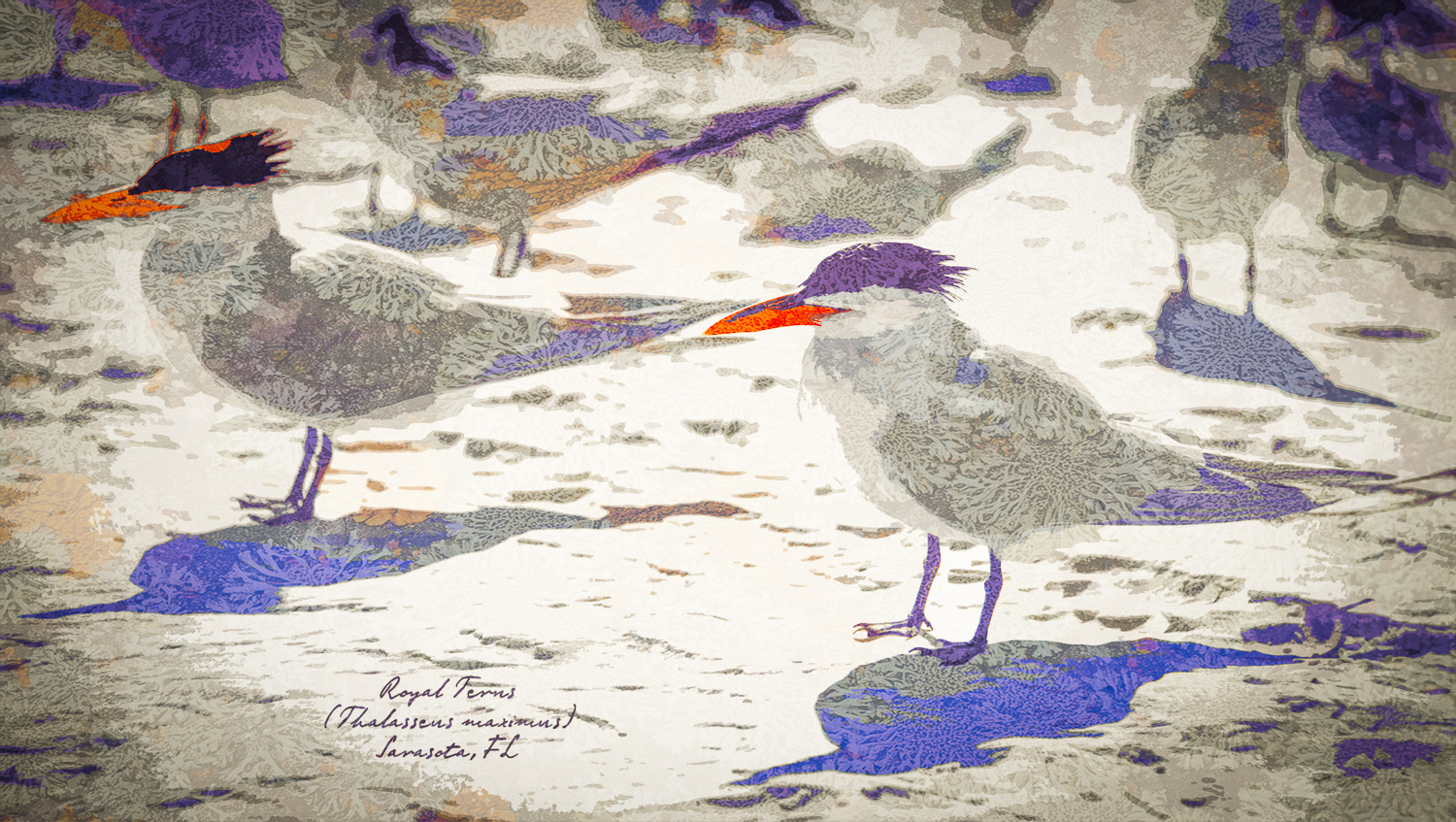
With its striking orange dagger of a bill and a shaggy black crest that looks perpetually windswept, the Royal Tern (Thalasseus maximus) is a quintessential fixture of Florida’s coastal landscapes. Second in size only to the Caspian Tern, this large, elegant seabird patrols the state’s beaches, estuaries, and salt marshes year-round, embodying the dynamic spirit of the shorelines.
Identification and Behavior
The Royal Tern is easily distinguished from other coastal birds by its clean white plumage, pale gray upper wings, and deeply forked tail. During the breeding season, adults sport a solid black cap that extends down to the eyes. By late summer and throughout the winter, this cap recedes, leaving a distinctive patch of white on the forehead while keeping the shaggy black crest at the back of the head intact.
Unlike gulls, which typically scan the sand or scavenge for food, Royal Terns are specialized plunge-divers. They fly gracefully above the surf, tilting their heads downward to spot small fish like menhaden, anchovies, and sardines, as well as occasional shrimp. When a target is acquired, they hover briefly before diving headfirst into the water with a sharp splash, almost always emerging with their prey secured firmly in their heavy bill.
Nesting and Colony Dynamics
In Florida, Royal Terns are highly social, especially when it comes to reproduction. They nest in dense, noisy colonies on isolated sandy beaches, barrier islands, and spoil islands created by dredged material. These locations are chosen specifically because they offer protection from land-based predators like raccoons and feral cats.
Their nesting strategy relies entirely on safety in numbers. Rather than building elaborate structures, a breeding pair scrapes a shallow depression directly into the sand, where the female typically lays a single, speckled egg.
Within a day or two of hatching, the chicks leave their individual scrapes to gather in a massive communal group called a crèche. A single crèche can contain hundreds or thousands of chicks huddled together for protection against predators and the intense Florida sun. Remarkably, despite the chaotic wall of sound within the colony, parent terns can locate their specific offspring out of thousands by recognizing its unique vocal calls.
Conservation Challenges
While Royal Terns remain relatively common throughout the Sunshine State, they face continuous pressure from human activity. Because they nest directly on open sand, their colonies are exceptionally vulnerable to human disturbance, off-road vehicles, and domestic pets. A single entering intruder can cause an entire colony to take flight, exposing the fragile eggs and chicks to predatory crows, gulls, or fatal overheating.
Rising sea levels and intense coastal storms also present significant risks by flooding low-lying nesting sites during the critical spring and summer breeding months. Protecting Florida’s designated critical wildlife areas and respecting seasonal beach closures ensure these striking aerial acrobats remain a permanent fixture of our coastlines.