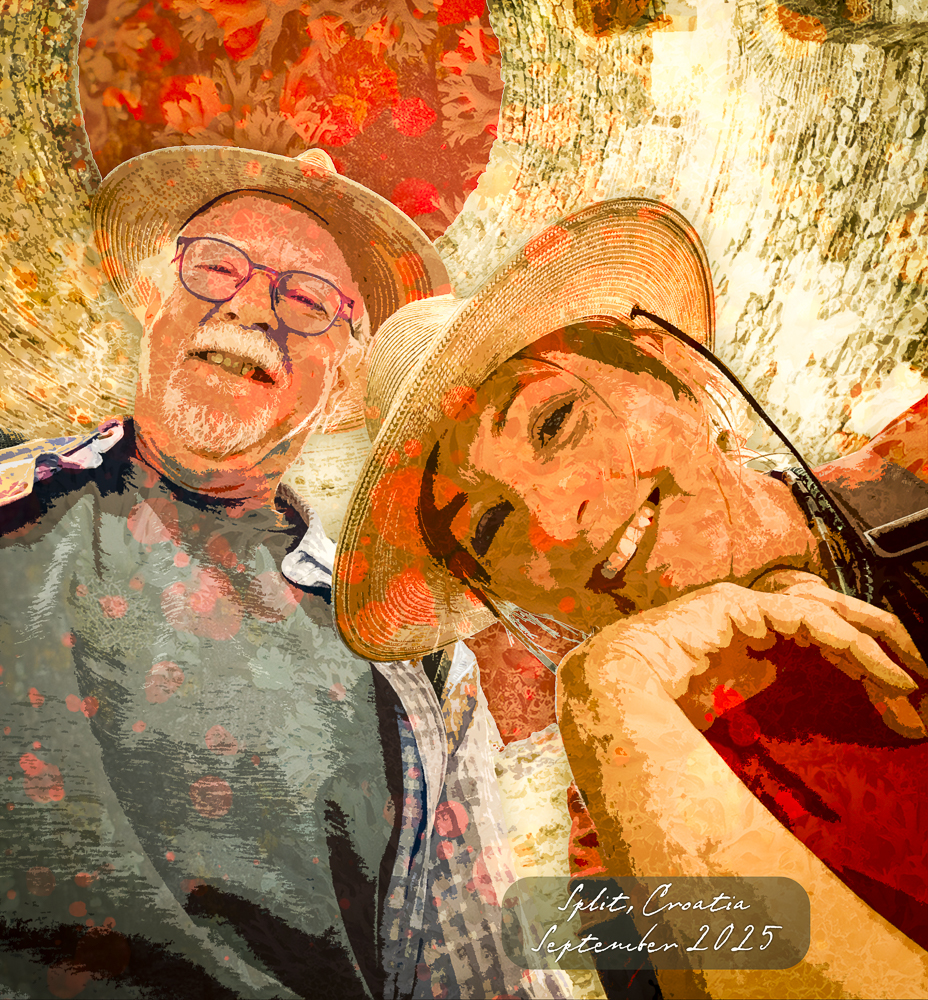
We spent 18 days in September and October 2025 in six countries: Croatia, Montenegro, Albania, Italy, Greece and Turkey. We started in Split, Croatia for a few days, then eleven days was on a cruise ship, then we spent another few days in Istanbul. Key observations:
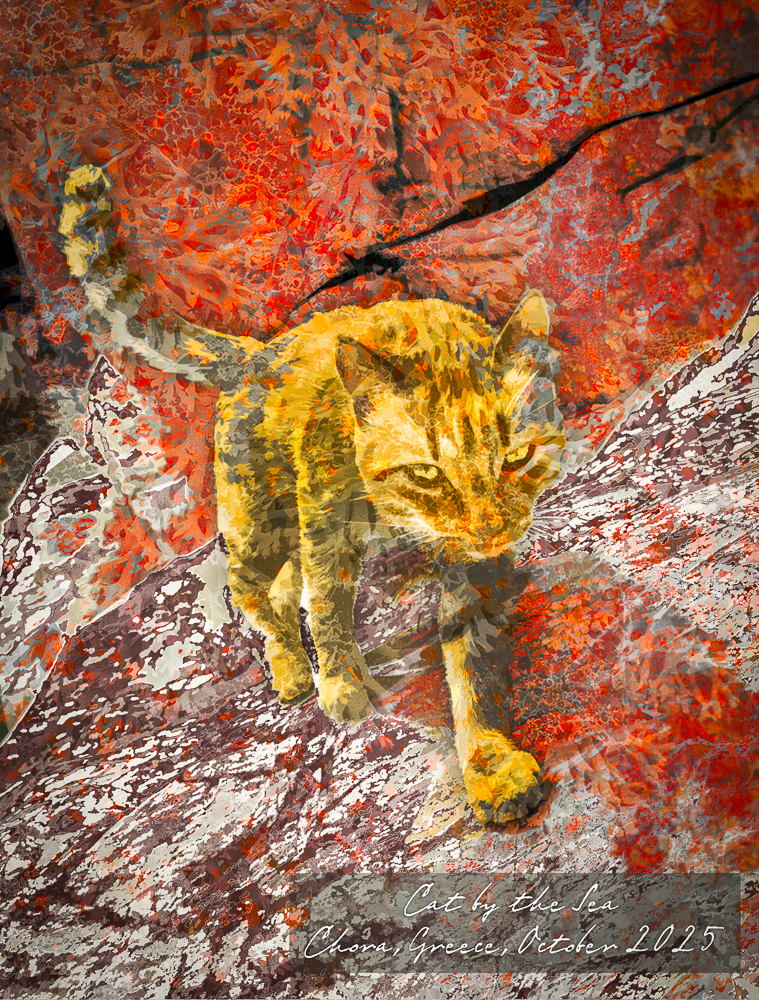
- Cats are highly regarded from Croatia to Turkey, and there are many feral cats lounging around on streets and sidewalks. And they are fed regularly by locals. On the other hand, feral dogs in Turkey are exterminated.
- It is very hard to tell tourists from locals, and harder to tell Americans from others. There seems to be a western homogenization that has occurred over the past fifty years. However, our guide in Istanbul told me he could tell I was an American “from one thousand feet away.”
- The cruise ship life has some wonderful aspects, but we are not convinced it’s a good way to see a country. Various cities came at us so fast, we barely know what we visited.
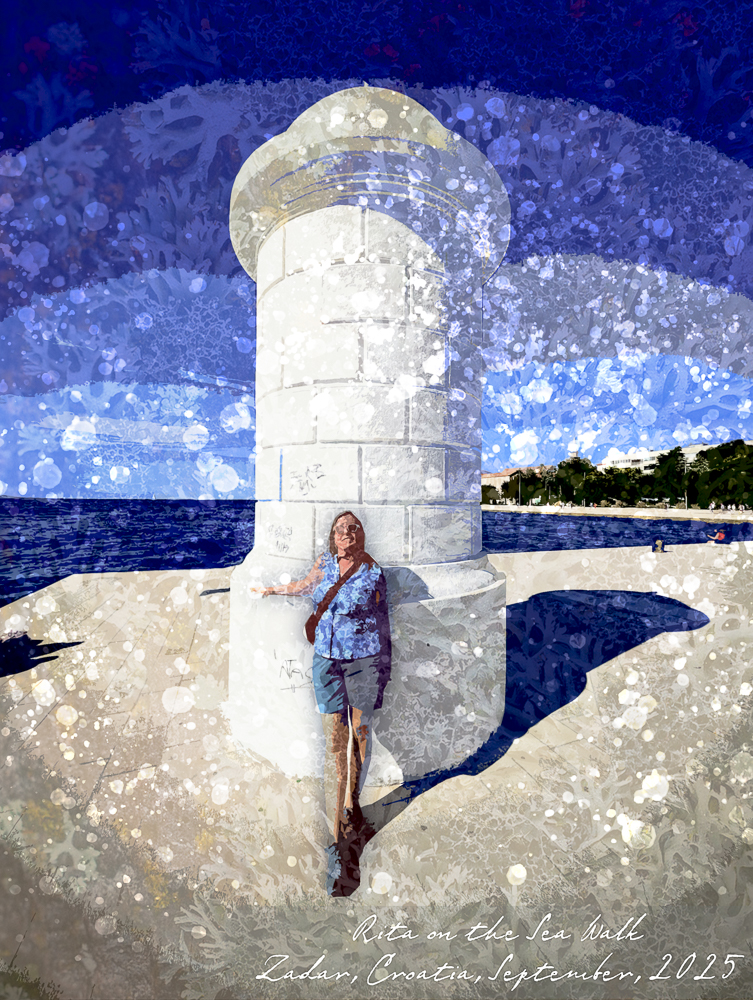
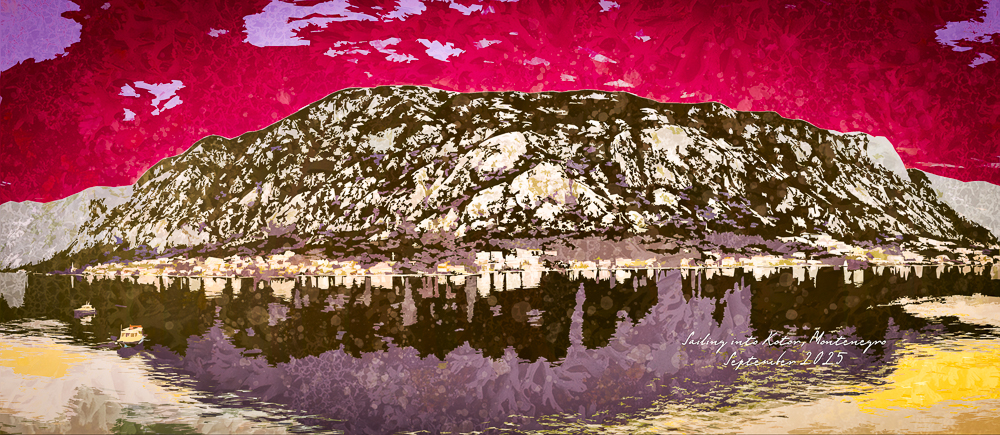
By any reckoning, the Dalmatian Coast of Croatia is one of Europe’s most captivating meeting places between land and sea — a thousand islands, a necklace of limestone mountains, olive groves, pine-fragrant headlands, and waters as clear as molten glass. To travel here as a naturalist is to enter a world where geology, biology, and mythology converge in shimmering detail.
The Living Limestone Coast
The backbone of Dalmatia is limestone — ancient seabed turned to stone, lifted by tectonic forces and sculpted by rain. Everywhere one walks, the rock shows its bones. In places it lies bare and white, like the ribs of the earth. Elsewhere, it crumbles into red soil that nourishes vineyards and fig trees. Karst landscapes dominate — riddled with caves, sinkholes, and subterranean rivers that seem to breathe like living creatures beneath the land.
Limestone’s gift to the naturalist is contrast: fertility beside barrenness, lush olive terraces beside gray cliffs. Where soil collects in the hollows, a remarkable flora takes hold — rosemary, sage, rockrose, and wild lavender scenting the air. The Dalmatian karst is a garden of tenacity. Botanists have catalogued over 3,000 plant species here, including many endemics like the delicate Campanula portenschlagiana, a violet bellflower that thrives in stone crevices like a poem hidden in a wall.
The Adriatic’s Shimmering Skin
Step to the water’s edge, and another realm begins — the Adriatic Sea, that ancient blue mirror stretching between Croatia and Italy. It’s a body of water both ancient and alive, with one of the highest levels of endemism in the Mediterranean. Shoals of sardines and anchovies glimmer near the surface, while groupers patrol the rocky depths. Dolphins arc between ferry wakes, and sea turtles — the loggerhead, Caretta caretta — occasionally surface, their eyes level and unhurried, as if remembering older worlds.
In the shallows, a snorkeler finds underwater meadows of Posidonia oceanica, seagrass that provides nursery grounds for countless species. These meadows exhale oxygen and cradle biodiversity — living equivalents of coral reefs in temperate seas. Their existence here reminds one how intimately the coast depends on the health of its hidden roots.
Islands of Stone and Story
There are said to be over a thousand islands along the Dalmatian Coast, though only about fifty are inhabited. Each has its own ecology, microclimate, and mood. Hvar is perfumed by lavender and sage; Vis lies further out, wild and untamed, with sea caves where monk seals once slept. On Mljet, an emerald island half protected as national park, Aleppo pines fringe two saltwater lakes where herons hunt and cormorants dry their wings.
As a naturalist, one quickly sees how isolation breeds diversity. The island flora shows patterns of speciation similar to Darwin’s Galápagos — different subspecies of lizards, distinct wildflowers adapted to slight shifts in soil or exposure. On the island of Biševo, a tiny blue cave glows with an otherworldly light, sunlight refracted through the sea into the chamber below. One might call it geology in ecstasy — stone and light dancing in water’s language.
Of Vines, Olives, and Human Ecology
Dalmatia’s landscapes are not wild in the untouched sense. Humans have shaped them for millennia, yet with a kind of ecological grace. The stone terraces — suhozidi — trace the contours of hillsides, each wall built without mortar, stone balanced upon stone. They hold back soil, create microclimates, and serve as lizard highways. These terraces, seen from the air, look like fingerprints of human patience pressed upon the earth.
The olive tree, that Mediterranean archetype, thrives in this rocky terrain. Many are centuries old, their trunks twisted like driftwood. Farmers still harvest by hand, spreading nets beneath the boughs. The resulting oil carries the scent of sun and salt. Grapes, too, find purchase here: the Plavac Mali varietal — cousin of Zinfandel — produces wines dark as the Dalmatian night. One learns quickly that ecology here includes the human palate. The landscape’s yield is edible poetry.
Birds Between Continents
For a naturalist, the spring and autumn skies of Dalmatia are an aerial migration corridor. Tens of thousands of birds pass over or pause to rest: honey buzzards, hoopoes, bee-eaters, and swallows by the multitude. The cliffs of Paklenica National Park echo with the cries of peregrine falcons, while offshore islets host colonies of yellow-legged gulls and shearwaters.
Perhaps most evocative is the sight of the Eleonora’s falcon — a slim, dark raptor that times its breeding to coincide with autumn migrations, feasting on songbirds blown southward. These falcons nest in the sea cliffs of islands like Lastovo and Vis, and to watch one wheel above the water at dusk is to glimpse predation turned to ballet.
Myth and the Mirror of the Sea
Dalmatia, of course, is more than natural spectacle. It’s a coast layered with myth. The name itself may derive from the ancient Illyrian tribe, the Dalmatae — “shepherds of sheep.” Their presence lingers in the flocks that still graze mountain pastures. The Greeks sailed here, the Romans built palaces, and the Venetians ruled by sea. Every era has left its fossils.
As one drifts between islands, it’s easy to imagine Odysseus passing this way, or the sirens whose songs, according to legend, lured sailors onto the rocks near Hvar. Even the wind has names steeped in story — bura from the northeast, dry and fierce; jugo from the south, moist and moody. To the fisherman and farmer, these are not meteorological abstractions but spirits — capricious gods who decide whether a day will be kind or cruel.
The Light That Transforms
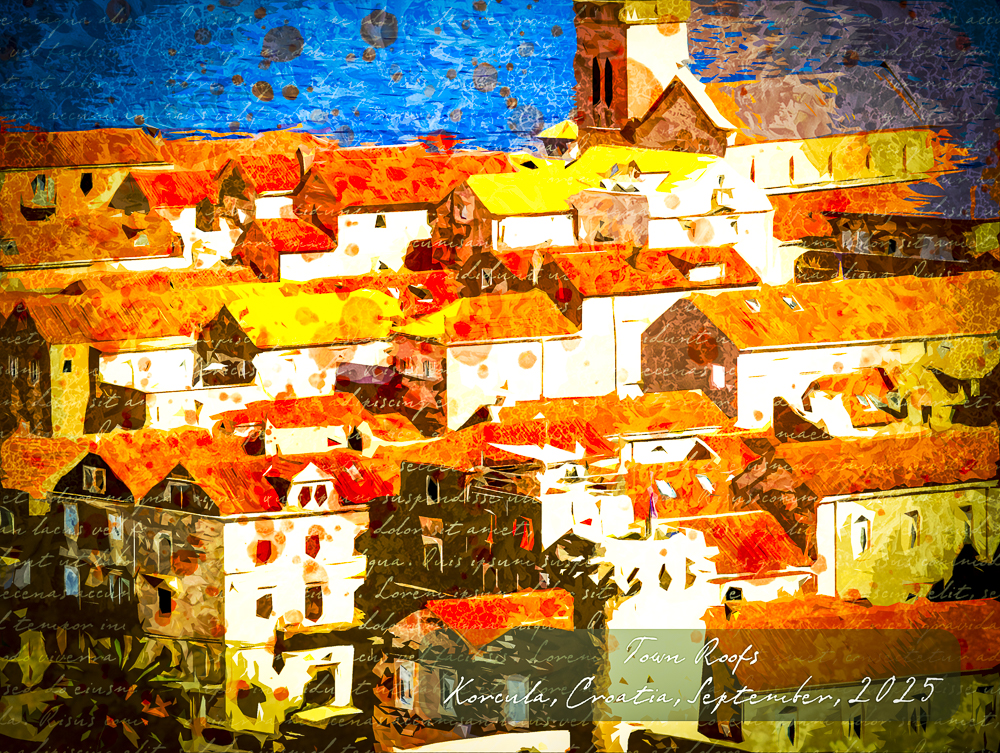
Painters speak of Dalmatian light with reverence. It’s a crystalline radiance that makes colors almost vocal — the turquoise sea against white stone, the silver of olive leaves, the terracotta of roofs. A naturalist might note that this brilliance comes from the clarity of the atmosphere, the paucity of dust, the angle of the sun over reflective limestone. But that’s only half the truth. The rest belongs to emotion.
Walking the coastal paths at evening, one senses that light itself is alive — shifting, breathing, reshaping form. It’s no wonder that local legends treat dawn and dusk as thresholds between worlds. In Trogir, an old fisherman once told me that “the sea and the sky here are lovers — always chasing each other, never quite catching.” I thought then that he had defined the entire Adriatic in one sentence.
Soundscapes and Silences
Nature here is not silent. The cicadas start at midday, their collective hum pulsing like a heartbeat through the pines. At dusk, the sound softens — replaced by the metallic clicking of geckos on stone walls and the splash of fish breaking the surface. Offshore, the sea holds its own symphony: the croak of toads in freshwater springs, the whisper of wind in seagrass, the occasional groan of a distant ferry.
Yet, paradoxically, Dalmatia teaches the value of silence. On a windless morning, among olive groves or at the summit of Mount Biokovo, the stillness feels like a form of listening — as if the landscape itself were catching its breath. To dwell in that silence is to feel both infinitesimal and infinite.
The Guardians of Biokovo
No study of Dalmatia is complete without its mountains. Biokovo rises abruptly from the sea, a wall of gray stone towering above the Makarska Riviera. At its summit, 1,762 meters above the sea, alpine flora thrives just miles from subtropical beaches. Edelweiss grows among dwarf pines; chamois navigate impossible cliffs; and clouds slide over the ridges like living mist.
The Biokovo Nature Park is a lesson in vertical ecology — Mediterranean at the base, alpine at the top. Each 100 meters of elevation brings new communities of plants and animals. Standing on the glass skywalk that juts from the cliffs, one sees the Adriatic stretching to Italy and understands, viscerally, the phrase “edge of the world.”
The Return of the Wild
After centuries of human use — logging, grazing, and war — parts of Dalmatia are quietly rewilding. Brown bears and wolves roam the hinterlands again, symbols of nature’s resilience. Griffon vultures, once extinct along the coast, have begun tentative returns to islands like Cres and Krk. Local NGOs work to reestablish the balance between pastoral life and predator presence. The movement is both ecological and philosophical: a recognition that the wild is not the enemy, but the mirror of our own endurance.
Reflections of a Naturalist Traveler
For the naturalist, the Dalmatian Coast is both laboratory and sanctuary. It reveals how life adapts to scarcity, how stone can nurture softness, and how human tradition can coexist with natural law. It’s a place where one may wake to the cry of a gull, swim among sea urchins and ancient ruins, and spend the evening beneath stars undimmed by city light.
As I traveled from Split to Dubrovnik, I felt increasingly that Dalmatia exists in layers — geological, biological, and spiritual. The karst beneath one’s feet, the olive terraces built by ancestors, the myths of wind and wave — all form a continuum of meaning. The naturalist’s role here is not only to observe, but to listen, to translate the language of the landscape.
And what does it say? Perhaps this: that endurance and beauty are twin forces, like limestone and sea. That every gull’s wingbeat is a reminder of motion’s grace. That every crumbling terrace wall, draped in thyme and lichen, whispers of coexistence.
The Sea’s Benediction
On my final evening, I watched the sun set over the island of Korčula. The water turned from cobalt to violet to the softest rose, the horizon dissolving into a haze of light. A fisherman nearby drew in his net, humming an old tune whose words I didn’t know but somehow understood.
As darkness settled, the scent of pine and salt filled the air. I thought of the generations who had lived here — Illyrians, Romans, Croats, Venetians — and of the creatures who still call this coast home: the kestrel gliding over the cliffs, the sea turtle rising for breath, the olive tree bending in the bura wind.
The Dalmatian Coast endures not because it is unchanging, but because it changes well. It absorbs and transforms — light, story, species, and human hope — into something balanced, timeless, and whole.
And so I left it with gratitude, feeling that this narrow ribbon of land and sea had offered more than observation — it had offered initiation. The naturalist’s journey, after all, is never just about cataloguing life. It is about remembering that we belong to it.