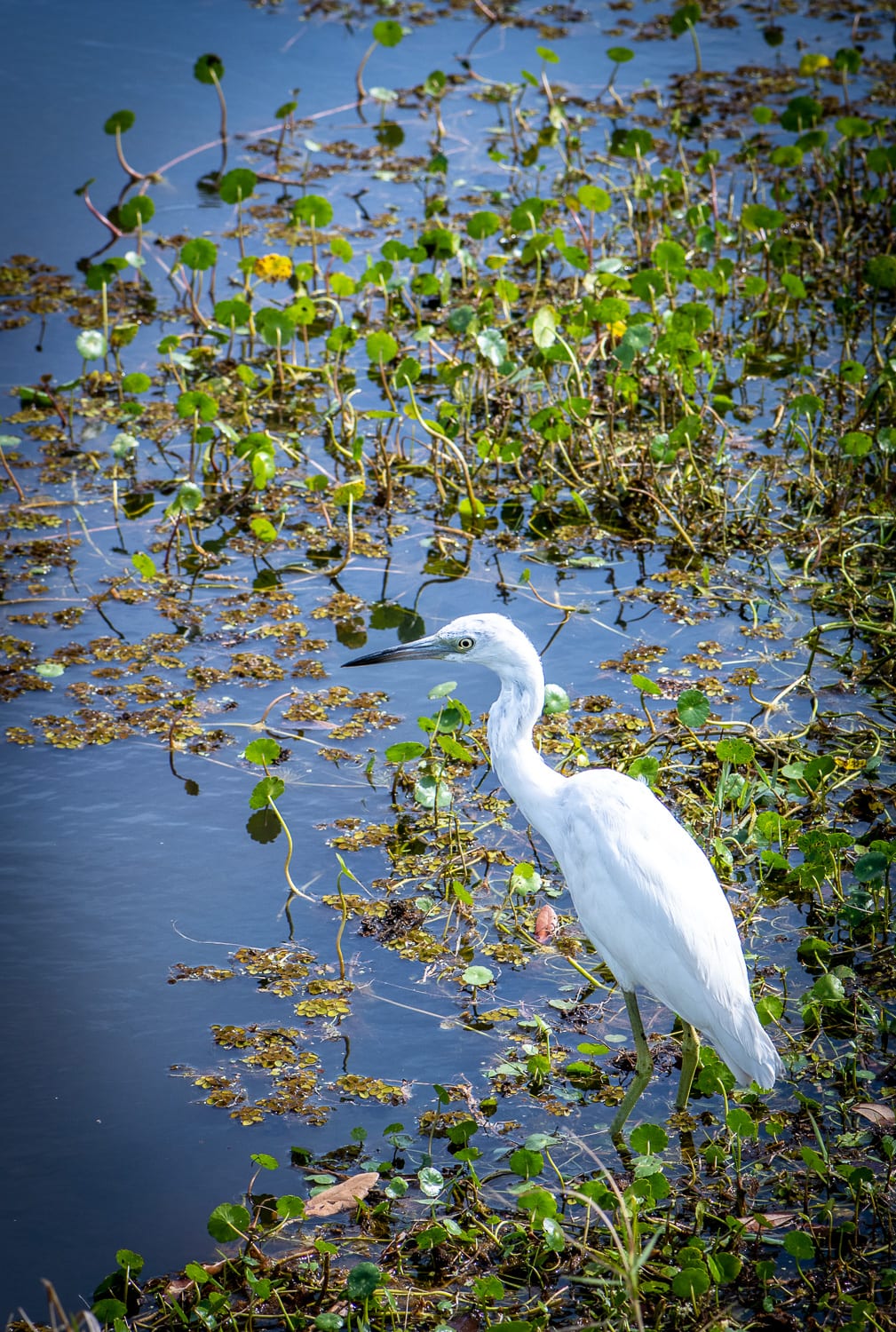
If Sarasota had a beating green heart tucked inside its suburban chest, it would be Urfer Family Park—a 72-acre blend of pine flatwoods, wetlands, history, wildlife, and playful modern comforts, all stitched together in one of the most walkable nature parks in the county.
It’s a place where families picnic, runners jog, toddlers conquer playgrounds, and naturalists like me wander off the paved trail, whispering to saw palmettos and eavesdropping on red-shouldered hawks. Urfer is that rare pocket park that manages to feel both intimate and surprisingly wild—proof that you don’t need to drive to the Myakka frontier to immerse yourself in authentic Florida nature.
How to Get There (Directions That Even an Anxious Snowy Egret Could Follow)
Urfer Family Park sits at a convenient crossroads of Sarasota living, right beside busy Bee Ridge Road—though once you enter the park, the traffic hum fades into something more like a memory than a nuisance.
From Downtown Sarasota (about 15 minutes):
- Head east on Fruitville Road or Bahia Vista—whichever your mood prefers.
- Turn right onto Honore Avenue.
- Head south until you reach Bee Ridge Road.
- Turn left (east), drive about one mile.
- The park will appear on your right, like a green oasis offering you sanctuary.
From I–75:
- Exit at Bee Ridge Road (Exit 207).
- Head west for about two minutes.
- Look for the massive pines, playgrounds, and walking trail: that’s Urfer.
- Turn left into the entrance and prepare to shed your stress like a molting anhinga.
From South Sarasota / Gulf Gate:
- Take Clark Road east to Honore Avenue.
- Turn left (north) on Honore.
- Continue until Honore meets Bee Ridge.
- Turn right (east). Park will be on the right after one minute of driving.
If you hit I-75 again, you’ve gone too far and should immediately blame your GPS.
First Impressions: Pine Air, Quiet Water, and Suburban Wilderness
Walking from the parking lot into Urfer Family Park always feels like passing through a portal. One moment I’m in the familiar sprawl of Sarasota—Publix carts, HVAC vans, people arguing about pickleball—and the next I’m beneath a cathedral of longleaf and slash pines, their needles sighing in the wind like an old storyteller getting comfortable.
Pine flatwoods are Florida’s most underappreciated biome. Some folks call them “empty,” but those folks have never watched a red-bellied woodpecker hop up a trunk like a caffeinated acrobat, never smelled the clean, resinous breath of pine sap on a warm morning, never listened to the droning, sacred hum of cicadas announcing summer.
Urfer has that kind of quiet—the kind that reminds you you’re part of something older and slower than modern life allows.
And this brings me to the park’s highlights.
The Top Eight Features of Urfer Family Park
(As chosen by a Florida naturalist who believes pine trees are underrated spiritual mentors)
1. The Boardwalk Over the Wetland—A Florida Amphitheater
The wooden boardwalk near the start of the trail is like stepping into Florida’s watery dreamscape. One moment you’re among the pines; the next you’re suspended over a shallow wetland filled with lily pads, darting dragonflies, and the occasional turtle sunning itself like a small, contemplative Buddha.
This is a perfect place for early-morning wildlife sightings. On one visit, I watched a great egret catching breakfast—standing perfectly still before striking with such elegance you’d think it practiced ballet in its free time.
2. Pine Flatwoods Trail—The Park’s Soul
This looping trail transports you into authentic Southwest Florida flatwoods, where slash pines stretch upward and saw palmettos carpet the earth with dense fans. Flatwoods are deceptively alive: skinks hustle underfoot, cardinals toss out bright whistles, and gopher tortoises graze like miniature cows with shells.
If you want the “real Florida” experience without driving to Myakka, this is it.
3. The Old Dr. C. B. Wilson House—A Walk Into Sarasota’s Pioneer Past
This beautifully preserved 1913 homestead stands like a time capsule. The creaking porch boards, the crisp white siding, the high windows—it all whispers of Florida’s pioneer days, when mosquitoes were plentiful and air conditioning was a dream whispered only in the hottest corners of the summer.
Walking through the house gives you a sense of Sarasota before developments and roundabouts took over. It’s one of the best examples of early settler architecture in the county, and naturalists love it because old Florida homes always come with old Florida stories.
4. The Fitness Trail—For Humans Who Still Think They’re Panthers
Along the paved walkway, you’ll find a series of exercise stations with bars, steps, and balancing logs designed to remind adults they still have knees, ankles, and dignity.
The naturalist in me finds charm in watching squirrels mimic the visitors, scampering up the bars like tiny athletes.
5. The Two Playgrounds—Where Young Humans Exhibit Natural Behaviors
Kids are little mammals with strong climbing instincts. Urfer respects this ecological truth and provides two excellent playgrounds where children can practice swinging, sliding, running, giggling, and occasionally screaming like distressed ospreys.
Naturalists approve.
6. The Picnic Pavilions—Best Lunch Spot in Sarasota Suburbia
Nothing tastes better than a sandwich in the shade of Florida pines. The pavilions here offer rest, shelter, and a front-row seat to the osprey show overhead. Bring a camera—you never know when a gopher tortoise might stroll through like it owns the place. (It kind of does.)
7. The Dog-Walking Loop—Where Paws and Palmettos Meet
Urfer attracts dogs like flowers attract butterflies. There is no official dog park section, but the paved loop trail is a favorite among local canines who enjoy sniffing the breeze, lifting their heads to the pine scent, and occasionally barking at anoles who pretend not to care.
8. The Wildlife Corridor—A Subtle but Vital Eco-Passage
Running through the park is part of a county-managed wildlife corridor designed to allow animals—especially bobcats, tortoises, raccoons, and birds—to safely move through the suburban matrix. You might not notice it at first, but it’s the reason Urfer feels so alive.
This is the park’s secret power.
A Florida Naturalist’s Walk: Moments and Encounters
Every naturalist walk has a few epiphanies—some profound, some ridiculous.
Here are a few from Urfer:
- I once watched a pileated woodpecker hammer at a pine trunk so vigorously that bark chips flew like confetti at a parade.
- A tiny green treefrog once hitched a ride on my hat for half a mile before chirping directly into my ear, startling me so much I nearly became part of the wetland.
- A red-shouldered hawk once perched on an exercise station, judging joggers with unmistakable avian superiority.
- I watched a gopher tortoise chew serenely on a clump of wiregrass while two toddlers whispered, “He’s so wise,” which might be the most accurate thing said in Florida that day.
Urfer is full of these small wonders. They’re easy to miss unless you’re paying attention, and attention is what naturalists do best.
Flora of Urfer Family Park
(A sampling from a plant geek who occasionally talks to trees)
Trees & Shrubs
- Longleaf pine
- Slash pine
- Live oak
- Laurel oak
- Cabbage palm
- Saw palmetto
- Wax myrtle
- Sweetgum
- Red maple (in wet areas)
Wetland & Meadow Plants
- Pickerelweed
- Duck potato
- Soft rush
- Arrowhead
- Swamp fern
- Maidencane
- Florida paintbrush
- Goldenrod (seasonal blooms)
- Marsh hibiscus
Hammock & Understory Plants
- Beautyberry
- Yaupon holly
- Wild coffee
- Muscadine grape vine
- Resurrection fern
- Bromeliads
- Spanish moss
These plants form the architecture of the park’s natural world—the rooms and hallways where wildlife conduct their daily business.
Fauna of Urfer Family Park
(Creatures observed or commonly expected—your local cast of wild characters)
Birds
- Osprey
- Red-shouldered hawk
- Great egret
- Little blue heron
- Tricolored heron
- Pileated woodpecker
- Red-bellied woodpecker
- Carolina wren
- Eastern bluebird
- Northern cardinal
- American robin (winter)
- Common grackle
- Anhinga
- Mourning dove
- Blue jay
Mammals
- Eastern gray squirrel
- Raccoon
- Opossum
- Cotton rat
- Marsh rabbit
- Bobcat (rare but confirmed in the corridor)
- Gopher tortoise (yes—reptile, not mammal, but important enough for promotion)
Reptiles & Amphibians
- Gopher tortoise
- Peninsula cooter turtle
- Red-bellied turtle
- Brown anole
- Green anole
- Skinks (broad-headed and ground)
- Southern toad
- Green treefrog
- Rat snake
- Black racer
Invertebrates
- Swallowtail butterflies
- Gulf fritillaries
- Zebra longwings
- Dragonflies (blue dasher, widow skimmer)
- Lubber grasshoppers
- Golden-orb spiders
A naturalist could spend a whole morning here tallying species while pretending not to be overly excited about spotting a tortoise.
Why Urfer Family Park Is More Than a Suburban Green Space
Some parks are destinations. Others are sanctuaries.
Urfer is the latter.
It is the antidote to the hurried pace of Sarasota life, a reminder that even surrounded by shopping centers and medical offices, Florida nature persists with fierce persistence.
It is a place where:
- families picnic
- runners sprint
- dogs sniff
- tortoises meander
- birds deliver daily concerts
- history remains rooted in old wooden walls
- and naturalists discover unexpected beauty in ordinary corners.
Where else can you watch a woodpecker, admire a century-old pioneer home, rest beneath pines, greet a gopher tortoise, and then hop over to a playground—all within one loop trail?
Leaving the Park, but Not the Feeling
At the end of my last visit, as I walked back toward the parking lot, a soft breeze rolled through the pines. The sound—part whisper, part sigh—felt like a small benediction.
A red-shouldered hawk called from somewhere above the flatwoods, and I felt that familiar tug naturalists get: the desire to stay just five more minutes… or five more hours.
Even after you drive away, Urfer sticks with you—a reminder that nature is not somewhere “out there.” It’s woven into the everyday fabric of Sarasota, hiding in plain sight, waiting for anyone willing to slow down and notice.